Year 2 Maths Worksheets PDF: A Comprehensive Guide
Year 2 maths worksheets in PDF format offer focused practice across essential topics like addition‚ subtraction‚ and place value‚ aiding student comprehension and skill development.
Year 2 mathematics builds upon the foundational skills established in Year 1‚ introducing more complex concepts and problem-solving techniques. Children begin to tackle more challenging addition and subtraction problems‚ often moving beyond simple counting on fingers. A crucial element is developing a strong understanding of place value – grasping the significance of tens and ones – which is fundamental for future mathematical success.
Furthermore‚ Year 2 introduces the basics of multiplication and division‚ typically through repeated addition and grouping. Worksheets‚ particularly those available as PDFs‚ provide a structured way to reinforce these concepts. They cover essential areas like skip counting‚ telling time‚ and recognizing different coins‚ preparing students for more advanced mathematical learning. These resources are designed to be accessible and engaging‚ fostering a positive attitude towards mathematics.
Why Use Worksheets?
Worksheets are invaluable tools for reinforcing mathematical concepts learned in the classroom‚ providing targeted practice and solidifying understanding. They allow children to work independently‚ building confidence and self-reliance. Specifically‚ Year 2 maths worksheets PDF format offers a convenient and cost-effective solution for both teachers and parents.
These printable resources can be easily downloaded and printed as needed‚ eliminating the need for expensive textbooks or online subscriptions. Worksheets cater to diverse learning styles‚ offering a variety of question types – from simple calculations to word problems – to keep children engaged. Regular worksheet practice helps identify areas where a child may be struggling‚ allowing for focused intervention and support. They also provide a tangible record of progress‚ showcasing improvement over time.
Benefits of PDF Format
PDFs offer unparalleled convenience when utilizing Year 2 maths worksheets. Their universal compatibility ensures they can be opened and printed on virtually any device – computers‚ tablets‚ and smartphones – without formatting issues. This accessibility is crucial for both home learning and classroom use. Furthermore‚ PDFs maintain the original layout‚ preserving the clarity and visual appeal of the worksheets.
Downloading Year 2 maths worksheets in PDF format eliminates the need for an internet connection once downloaded‚ making them ideal for travel or areas with limited connectivity. They are also easily shareable via email or cloud storage‚ facilitating collaboration between teachers‚ parents‚ and students. The compact file size of PDFs ensures quick download times and minimal storage space usage‚ making them a practical and efficient resource.
Core Maths Topics for Year 2
Year 2 maths worksheets PDF commonly focus on building foundational skills in addition‚ subtraction‚ place value‚ and early concepts of measurement and geometry.
Addition and Subtraction
Year 2 maths worksheets PDF dedicate significant attention to addition and subtraction‚ forming the cornerstone of early mathematical fluency. These resources typically begin with single-digit addition & subtraction‚ progressing to addition & subtraction within 20‚ reinforcing number bonds and strategies.
A crucial element involves applying these skills to real-world scenarios through word problems: addition & subtraction. These worksheets encourage children to decipher the operation needed – addition or subtraction – based on the context of the problem.

PDF formats allow for consistent practice‚ offering varied question types like number lines‚ missing number problems‚ and column addition/subtraction (without regrouping initially). The worksheets often include visual aids to support understanding and build confidence in solving arithmetic problems‚ preparing students for more complex calculations later on.
Single-Digit Addition & Subtraction
Year 2 maths worksheets PDF focusing on single-digit addition and subtraction establish foundational arithmetic skills. These worksheets present problems like 3 + 5 = ? and 8 — 2 = ?‚ utilizing visual aids such as pictures of objects (apples‚ balls‚ etc.) to represent quantities. This helps children grasp the concept of combining or taking away.
Worksheets often incorporate number lines for students to visually ‘jump’ along to find the answer‚ reinforcing the relationship between addition and subtraction. Emphasis is placed on learning number bonds to 10‚ a critical skill for mental math.
PDF format allows for repeated practice without needing to redraw problems‚ and often includes variations like missing number questions (e.g.‚ 4 + ? = 9) to encourage problem-solving skills and a deeper understanding of number relationships.
Addition & Subtraction within 20
Year 2 maths worksheets PDF dedicated to addition and subtraction within 20 build upon single-digit skills‚ introducing larger numbers and more complex calculations. These worksheets commonly feature problems presented both horizontally (e.g.‚ 12 + 5 = ?) and vertically‚ preparing students for more formal methods.
Strategies like ‘number bonds to 10’ are extended‚ and children are encouraged to use their knowledge of tens and ones to break down numbers and simplify calculations. Visual representations‚ though less prominent than with single digits‚ may still be included.
PDF worksheets often include a mix of addition and subtraction problems on the same sheet‚ requiring students to identify the correct operation. They also frequently incorporate ‘missing number’ problems and opportunities for checking answers using inverse operations.
Word Problems: Addition & Subtraction
Year 2 maths worksheets PDF focusing on word problems for addition and subtraction are crucial for developing problem-solving skills. These worksheets present mathematical concepts within real-life scenarios‚ requiring children to identify the relevant information and the correct operation to use.
Problems typically involve one or two steps‚ using language appropriate for a Year 2 reading level. Common themes include sharing‚ collecting‚ and spending. Worksheets often emphasize keywords like ‘total’‚ ‘more’‚ ‘less’‚ and ‘difference’ to help students determine whether to add or subtract.
PDF formats allow for clear presentation of the problem and space for children to show their working‚ encouraging a structured approach to problem-solving. Some worksheets include prompts to write the number sentence.
Place Value and Number Sense
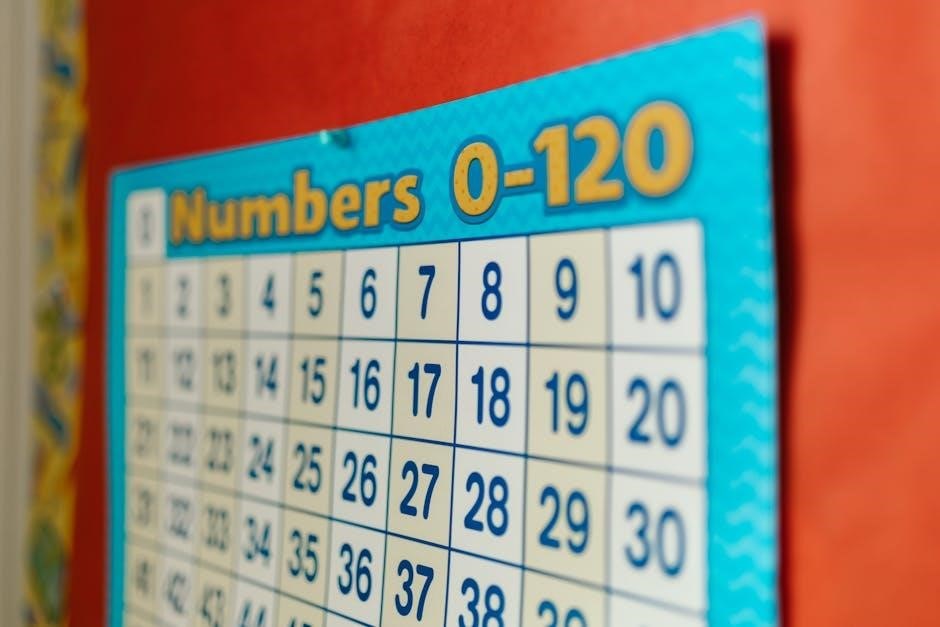
Year 2 maths worksheets PDF dedicated to place value and number sense build a foundational understanding of how numbers work. These resources focus on recognizing the value of digits in the tens and ones place‚ helping children move beyond simply counting to comprehending what numbers represent.
Worksheets typically involve identifying the value of underlined digits‚ composing and decomposing numbers‚ and representing numbers using base-ten blocks. Activities also include comparing and ordering numbers using greater than (>)‚ less than (<)‚ and equal to (=) symbols.
PDF worksheets provide structured practice‚ often progressing from concrete representations to abstract concepts. They are essential for developing a strong number sense‚ which is vital for future mathematical success.
Understanding Tens and Ones
Year 2 maths worksheets PDF focusing on tens and ones are crucial for establishing a solid grasp of place value. These worksheets visually demonstrate how numbers are composed‚ breaking them down into their tens and ones components.
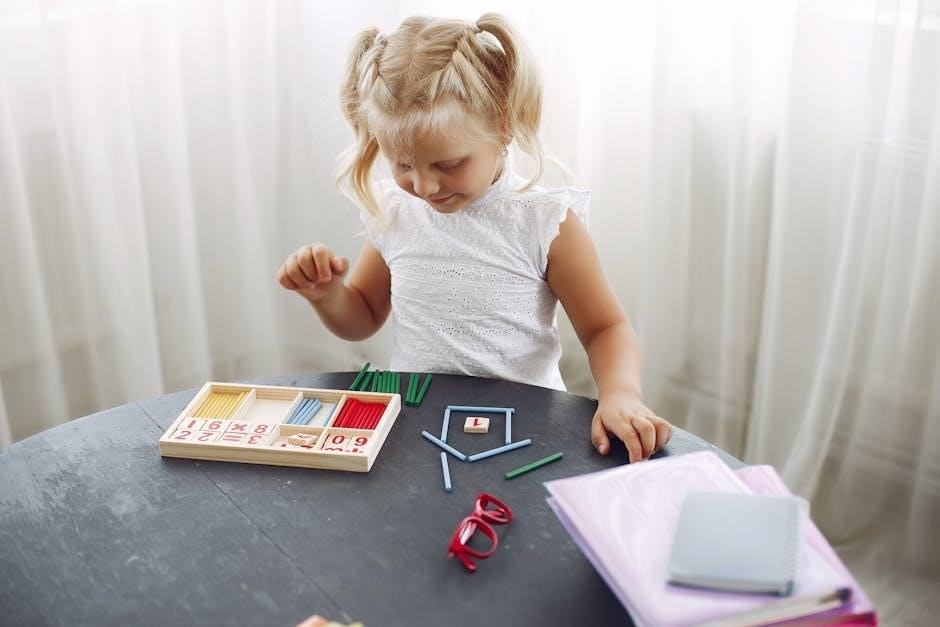
Common exercises involve partitioning two-digit numbers – for example‚ representing 35 as 3 tens and 5 ones. Students practice using base-ten blocks or drawing representations to solidify this understanding. Worksheets also include identifying the number of tens and ones in given numbers‚ and vice versa.
PDF format allows for repeated practice and independent learning. Mastering tens and ones is a fundamental step towards more complex mathematical operations‚ like addition and subtraction with regrouping.
Comparing and Ordering Numbers
Year 2 maths worksheets PDF dedicated to comparing and ordering numbers build upon the foundational understanding of place value. These resources typically present sets of numbers‚ requiring students to determine which is greater than‚ less than‚ or equal to another.
Worksheets often utilize the greater than (>)‚ less than (<)‚ and equal to (=) symbols‚ providing ample practice in their correct application. Ordering numbers – from smallest to largest or largest to smallest – is another key skill reinforced through these exercises.
PDF worksheets allow for varied practice‚ including comparing numbers with different numbers of digits. This skill is vital for developing number sense and preparing for more advanced mathematical concepts‚ fostering logical thinking and problem-solving abilities.
Identifying Even and Odd Numbers
Year 2 maths worksheets PDF focusing on even and odd numbers introduce this fundamental concept through visual aids and practical exercises. These worksheets typically present a series of numbers‚ prompting students to identify whether each number is even or odd.
The core principle – that even numbers are divisible by two with no remainder‚ while odd numbers are not – is reinforced through repeated practice. Worksheets often employ coloring activities or sorting exercises to solidify understanding.
PDF format allows for a diverse range of problems‚ from simple identification to applying the concept in basic number patterns. Mastering even and odd numbers is crucial for future work with multiplication‚ division‚ and number properties‚ building a strong mathematical foundation.

Measurement and Geometry
Year 2 maths worksheets PDF cover essential measurement skills and geometric concepts‚ including time-telling‚ money handling‚ and shape recognition for young learners.

Telling Time
Year 2 maths worksheets PDF dedicated to telling time are crucial for building foundational skills. These resources typically begin with recognizing o’clock times – understanding when the minute hand points directly at the 12. Worksheets progress to include half past the hour‚ requiring children to interpret the position of both hour and minute hands;
Many PDFs incorporate visual aids‚ like clock faces with movable hands‚ to enhance understanding. Practice exercises often involve matching times to clock faces‚ writing the time shown on a clock‚ and drawing hands to represent a given time.

Furthermore‚ some worksheets introduce the concept of time intervals in simple terms‚ preparing students for more complex time-related problems later on. Consistent practice with these PDF worksheets solidifies a child’s ability to confidently tell and understand time.
O’Clock and Half Past
Year 2 maths worksheets PDF focusing on ‘o’clock’ and ‘half past’ times are fundamental building blocks for time-telling proficiency. These worksheets commonly present clock faces where students must write the time when the minute hand points to 12 (o’clock) or 6 (half past).
Exercises often include matching digital times (e.g.‚ 3:00) to corresponding analog clock faces. A key element is reinforcing the language – “three o’clock” and “half past three”.
More advanced worksheets might ask students to draw the hour and minute hands to represent these times accurately. PDF formats allow for repeated practice‚ and many include answer keys for self-assessment. Mastering these concepts provides a solid foundation for understanding quarter past and to‚ ultimately leading to more complex time calculations.

Counting Money
Year 2 maths worksheets PDF dedicated to counting money are crucial for developing real-world mathematical skills. These resources typically focus on recognizing common British coins – pence and pounds – and calculating their total value. Worksheets often begin with identifying each coin and its worth‚ progressing to simple addition problems involving a few coins.
More challenging exercises present scenarios requiring students to select the correct coins to pay for items.
PDF worksheets frequently include visual aids‚ like pictures of coins‚ to support learning. They also help students practice converting pence to pounds and vice versa. The availability of answer keys allows for independent practice and immediate feedback‚ solidifying their understanding of monetary values and calculations.
Recognising Coins (Pence & Pounds)
Year 2 maths worksheets PDF focusing on coin recognition are foundational for building financial literacy. These worksheets typically present images of various British coins – 1p‚ 2p‚ 5p‚ 10p‚ 20p‚ 50p‚ £1‚ and £2 – and require students to identify each one correctly.
Exercises often involve matching coins to their corresponding values or circling specific coins within a group.
PDF formats allow for clear‚ printable images‚ aiding visual learning. Some worksheets incorporate colour coding to differentiate between pence and pounds‚ simplifying the initial learning process.
Progressively‚ worksheets may introduce mixed coin sets‚ challenging students to distinguish between different denominations quickly and accurately‚ preparing them for more complex money-related problems.
Simple Money Problems
Year 2 maths worksheets PDF incorporating simple money problems build upon coin recognition skills‚ applying them to real-world scenarios. These problems typically involve calculating the total cost of a few items‚ or determining change from a given amount.
Worksheets often present scenarios like “A pencil costs 15p and a ruler costs 20p. How much do they cost altogether?” or “You have 50p and buy a sweet for 10p. How much change do you receive?”
PDF format allows for varied problem layouts and clear presentation of monetary values.
These exercises encourage students to use addition and subtraction skills within the context of money‚ reinforcing both mathematical concepts and practical life skills‚ preparing them for future financial tasks.
Fractions and Data Handling
Year 2 maths worksheets PDF introduce basic fractions like halves and quarters‚ alongside data representation through pictograms and bar charts for analysis.
Year 2 maths worksheets PDF begin to build a foundational understanding of fractions‚ moving beyond whole numbers and introducing the concept of equal parts. These worksheets typically focus on representing fractions visually‚ helping children grasp the idea that a fraction represents a portion of a whole.
Initial exercises commonly involve dividing shapes – circles‚ squares‚ and rectangles – into two equal parts‚ introducing the fraction one-half (1/2). Worksheets will present images and ask students to identify the shaded portion as a half‚ or to shade half of a given shape. Similarly‚ they progress to dividing shapes into four equal parts‚ introducing the fraction one-quarter (1/4).
The emphasis is on concrete representation and visual learning‚ avoiding abstract numerical manipulation at this stage. PDF worksheets provide a structured and repeatable way for students to practice identifying and representing these basic fractions‚ solidifying their initial understanding before moving onto more complex fractional concepts.
Halves and Quarters
Year 2 maths worksheets PDF dedicated to halves and quarters provide targeted practice in recognizing‚ representing‚ and understanding these fundamental fractions. Worksheets frequently present visual models – shapes divided into equal parts – requiring students to identify whether the shaded portion represents a half or a quarter.
Exercises often involve shading portions of shapes to demonstrate understanding; for example‚ “Shade one-half of the circle” or “Shade one-quarter of the square.” Another common task is identifying if a shape is divided into equal halves or quarters‚ reinforcing the importance of equal partitioning.
These PDFs also introduce the concept of finding halves and quarters of quantities‚ such as finding half of 10 objects or a quarter of 16. The focus remains on visual and concrete examples‚ building a strong conceptual foundation before progressing to more abstract fractional operations. Consistent practice with these worksheets builds confidence and fluency.
Data Handling: Pictograms & Bar Charts
Year 2 maths worksheets PDF focusing on data handling introduce pictograms and bar charts as visual tools for organizing and interpreting information. Pictogram worksheets typically present data using symbols‚ where each symbol represents a specific quantity – for instance‚ one apple might equal two students.
Students practice reading pictograms to answer questions like “How many more apples than bananas are there?” or “What is the total number of fruits?” Bar chart worksheets present data using rectangular bars‚ with the height of each bar corresponding to the quantity it represents.
Exercises involve interpreting bar charts to compare data sets‚ identify the most and least frequent items‚ and calculate totals. These PDFs aim to develop essential data literacy skills‚ enabling students to extract meaning from visual representations of information and fostering analytical thinking.
Resources and Where to Find PDFs
Year 2 maths worksheets PDF resources are widely available online‚ offering convenient and accessible practice materials. K5 Learning (k5learning.com) provides a comprehensive collection of free‚ printable grade 2 math worksheets‚ categorized by topic‚ including addition‚ subtraction‚ and geometry.
Other valuable sources include Education.com‚ offering a diverse range of worksheets and activities‚ and Twinkl‚ which provides both free and paid resources‚ including comprehensive maths packs. Many educational websites also host user-generated content‚ offering a variety of worksheet options.
When selecting PDFs‚ consider the alignment with the curriculum and the clarity of instructions. Parents and educators can easily download and print these resources for focused practice‚ homework assignments‚ or classroom activities‚ supporting student success in Year 2 maths.