Auto Detailing Checklist PDF: A Comprehensive Plan
Utilizing a detailed auto detailing checklist, often in PDF format, streamlines operations, boosts efficiency, and enhances customer satisfaction within the car care industry.
Templates from sources like Template.net offer editable, customizable tools, integrating intake forms, work orders, and pre-detailing inspections for a seamless workflow.
Spreadsheet options, like those available on Google Docs, provide a flexible, customizable base for individual detailers to tailor to their specific needs.
Auto detailing checklists, frequently found as downloadable PDFs, represent a systematic approach to vehicle cleaning and restoration. They are essential tools for both professional detailers and automotive enthusiasts aiming for consistently high-quality results. These checklists move beyond simple washing, encompassing thorough interior and exterior processes.
The core purpose of a detailing checklist is to ensure no step is overlooked, promoting efficiency and minimizing errors. Modern checklists often integrate customer intake forms, work orders, and pre-detailing inspection reports into a single, manageable document. Digital formats, like Google Sheets, offer customization, while PDFs provide a readily printable, standardized version.
Effectively, a well-structured checklist elevates service quality, improves customer communication, and safeguards against potential liabilities by documenting the vehicle’s condition before and after detailing.
II. Benefits of Using a Detailing Checklist
Employing an auto detailing checklist, particularly in PDF format, yields significant advantages. Firstly, it dramatically improves efficiency by standardizing procedures and reducing the risk of missed steps. Secondly, checklists enhance customer satisfaction through consistent, high-quality service delivery, fostering trust and repeat business.
Furthermore, a detailed checklist serves as a valuable communication tool, clearly outlining the scope of work and agreed-upon services. Integrating pre-detailing inspection notes protects businesses by documenting existing vehicle conditions, mitigating potential disputes. Digital checklists, like those in Google Docs, allow for easy customization and data tracking.
Ultimately, utilizing a checklist streamlines operations, minimizes errors, and elevates the overall professionalism of the auto detailing process.
III. Types of Auto Detailing Checklists
Auto detailing checklists vary in scope, catering to diverse service levels. A Basic Wash & Wax Checklist focuses on essential cleaning – washing, drying, waxing, and tire shine – ideal for quick maintenance. Full Detail Checklists are comprehensive, encompassing exterior and interior cleaning, polishing, and protection.
Interior Detailing Checklists concentrate on cabin care: vacuuming, upholstery cleaning, dashboard detailing, and window cleaning. Exterior Detailing Checklists prioritize paint correction, wheel cleaning, and protective coatings.
Combined checklists, often found in PDF templates from resources like Template.net, integrate multiple aspects. Digital formats, such as Google Sheets, allow for customization, blending elements from different checklist types to suit specific client needs.
A. Basic Wash & Wax Checklist
A Basic Wash & Wax Checklist centers on fundamental vehicle cleaning. Key steps include a thorough wash using appropriate soap, followed by a complete and careful drying process to prevent water spots. Wax application is crucial, providing a protective layer and enhancing shine.
Tire cleaning and dressing are standard, improving the vehicle’s overall appearance. Glass cleaning, both inside and out, ensures clarity. Quick interior vacuuming removes loose debris.
PDF templates often streamline this process, offering a concise, easy-to-follow guide. This checklist is ideal for routine maintenance, offering a quick refresh without extensive detailing.
B. Full Detail Checklist
A Full Detail Checklist encompasses a comprehensive vehicle rejuvenation. Exterior tasks include a pre-wash rinse, wheel and tire cleaning, a thorough soap application, and clay bar treatment to remove contaminants. Polishing and waxing restore paint clarity and protection.
Interior detailing involves vacuuming all surfaces, cleaning the dashboard, console, and upholstery, plus window and mirror cleaning. Attention to detail extends to vents, crevices, and door panels.
PDF checklists for full details are extensive, ensuring no area is overlooked. This service aims for a showroom-quality finish, addressing both cosmetic and protective needs.
C. Interior Detailing Checklist
An Interior Detailing Checklist focuses on revitalizing the vehicle’s cabin. Essential steps begin with thorough vacuuming of seats, carpets, and mats, removing all debris. Dashboard and console cleaning follows, addressing dust and grime.
Upholstery cleaning and protection are crucial, utilizing appropriate products for the material type. Window and mirror cleaning ensures clarity, while final touches include air freshening and detailing vents.
PDF checklists often itemize specific areas like door panels, seat tracks, and cup holders. A detailed interior detail enhances comfort, hygiene, and the vehicle’s overall aesthetic appeal.
D. Exterior Detailing Checklist
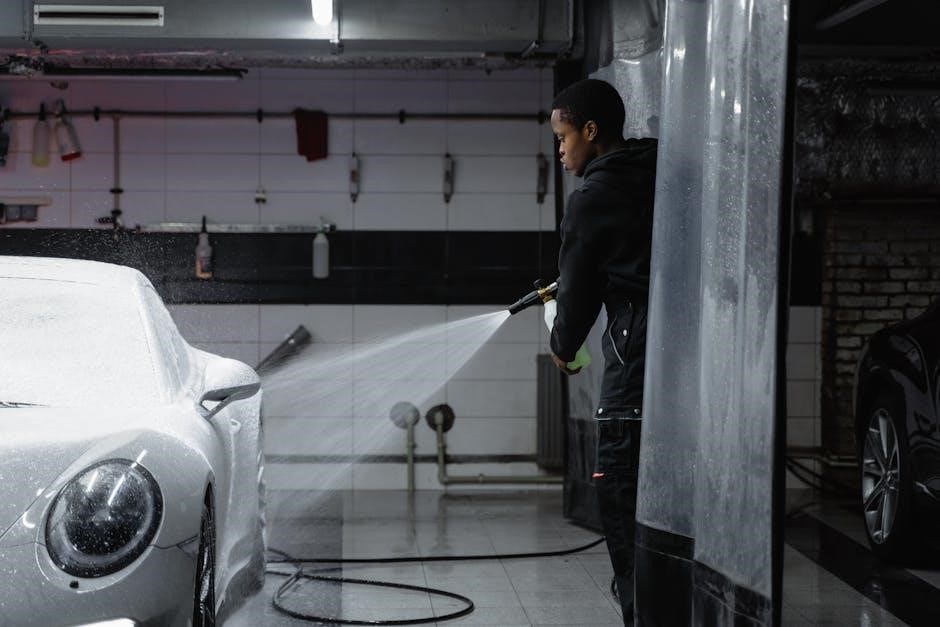
An Exterior Detailing Checklist prioritizes restoring and protecting the vehicle’s paint and surfaces. Initial steps involve a pre-wash rinse to remove loose dirt, followed by dedicated wheel and tire cleaning. Soap application and washing utilize quality products to lift grime safely.
Rinsing and drying are critical to prevent water spots. Clay bar treatment removes embedded contaminants, preparing for polishing. Polishing and buffing correct imperfections, while waxing or sealing provides lasting protection.
PDF checklists detail specific areas like trim, emblems, and exhaust tips. A comprehensive exterior detail enhances appearance and safeguards against environmental damage.
IV. Essential Tools & Supplies for Auto Detailing
A comprehensive auto detailing checklist necessitates a well-stocked arsenal of tools and supplies. Washing supplies include pH-neutral soaps, microfiber wash mitts, and drying towels. Polishing & waxing supplies demand quality compounds, polishes, applicators, and microfiber cloths.
Interior cleaning supplies require specialized cleaners for upholstery, vinyl, and leather, alongside protectants. Vacuum & brushes are vital for removing debris from carpets, seats, and crevices.
PDF checklists often include a dedicated section for inventory management. Having the right tools ensures efficient, professional results, and a satisfied customer.
A. Washing Supplies
Essential washing supplies, crucial for any auto detailing checklist, begin with pH-neutral car wash soap to avoid damaging paint. Microfiber wash mitts are preferred over sponges to minimize swirl marks. Two-bucket wash systems, with grit guards, prevent reintroducing dirt onto the vehicle.
High-quality drying towels, also microfiber, are vital for a spot-free finish. Wheel and tire cleaners, specific to wheel types, are necessary. Pre-wash solutions, like snow foam, loosen grime before contact washing.
A detailed PDF checklist should include quantities and brands for consistent results.
B. Polishing & Waxing Supplies
Polishing and waxing require specific supplies for paint correction and protection, essential components of a comprehensive auto detailing checklist PDF. Polishing compounds, varying in abrasiveness, address swirl marks and imperfections. Polishing pads, paired with a dual-action polisher, ensure effective correction.
Microfiber towels are crucial for removing polish residue. Wax or sealant provides a protective layer against the elements; options include carnauba wax, synthetic sealants, and ceramic coatings.
Applicator pads distribute wax evenly, while a PDF checklist should detail product choices and application techniques for optimal results.
C. Interior Cleaning Supplies
Interior detailing demands specialized cleaning supplies, vital for inclusion in any auto detailing checklist PDF. All-purpose cleaners (APCs) tackle various surfaces, while upholstery cleaners address fabric stains. Leather cleaners and conditioners maintain leather seats’ health and appearance.
Glass cleaners ensure streak-free windows, and detail brushes reach tight spaces. Microfiber towels are essential for wiping surfaces without scratching. A PDF checklist should specify product types and dilution ratios.
Protectants, like UV protectants for dashboards, prevent fading and cracking, contributing to a thorough and lasting interior detail.
D. Vacuum & Brushes
A robust vacuum is paramount for any auto detailing checklist PDF, effectively removing dirt and debris from carpets, seats, and crevices. HEPA filters are beneficial for allergen removal, enhancing interior air quality. Brush attachments are crucial for delicate surfaces and hard-to-reach areas.
Detailing brushes, in varying sizes and stiffnesses, are essential for cleaning vents, seams, and intricate dashboard components. Boar’s hair brushes are gentle on leather and sensitive plastics.
The checklist should specify brush types for different tasks, ensuring a comprehensive and scratch-free cleaning process, ultimately contributing to a superior detailing result.
V. Pre-Detailing Inspection Checklist
A thorough pre-detailing inspection, documented within the auto detailing checklist PDF, is vital for managing customer expectations and preventing disputes. This checklist should encompass both exterior and interior assessments, noting existing damage like scratches, dents, or stains.
Detailed documentation, ideally with photographs, serves as proof of pre-existing conditions, protecting the detailer from liability. The checklist should include sections for assessing paint condition, glass clarity, upholstery integrity, and overall cleanliness.
Integrating this inspection into a customer intake form and work order streamlines the process, ensuring transparency and a professional service.
A. Exterior Damage Assessment
The exterior damage assessment, a crucial component of the auto detailing checklist PDF, meticulously documents pre-existing conditions. This section focuses on identifying scratches, swirl marks, dents, chips in the paint, and any signs of corrosion. Detailed notes should specify the location, size, and severity of each imperfection.
Photographic evidence is essential, providing a visual record for both the detailer and the customer. The checklist should also assess the condition of the vehicle’s glass, noting cracks, chips, or excessive pitting. Proper documentation protects against claims of damage caused during the detailing process.
B. Interior Condition Assessment
The interior condition assessment, vital within the auto detailing checklist PDF, systematically evaluates the vehicle’s internal state. This involves inspecting upholstery for tears, stains, or excessive wear, noting the material type (leather, cloth, vinyl). Assess the condition of carpets and mats, documenting stains, rips, or fading.
Check dashboard and console surfaces for cracks, scratches, or discoloration. Document the functionality of all interior features – lights, windows, locks, and entertainment systems. Photographs are crucial for recording pre-existing damage, protecting the detailer from liability. A thorough assessment ensures realistic customer expectations and accurate service delivery.
C. Documenting Existing Issues (Photos)
A critical component of any comprehensive auto detailing checklist PDF is meticulous documentation of pre-existing vehicle conditions, primarily through photography. High-resolution images should capture all identified exterior damage – scratches, dents, paint imperfections – and interior flaws like stains, tears, or cracks.
Photos serve as irrefutable evidence, protecting the detailer from potential claims of damage caused during the detailing process. Ensure images are date-stamped and clearly labeled, referencing specific areas of concern. This visual record, integrated into the checklist, fosters transparency and builds trust with the customer, preventing disputes and ensuring satisfaction.
VI. Exterior Detailing Process – Step-by-Step
A detailed checklist PDF guides a systematic exterior detailing process, beginning with a pre-wash rinse to remove loose debris. Next, thorough wheel and tire cleaning prepares surfaces for dedicated cleaning agents. Soap application and washing, utilizing the two-bucket method, minimizes swirl marks.
Following a complete rinse and drying, a clay bar treatment eliminates embedded contaminants. Polishing and buffing restore paint clarity and gloss, while a final waxing or sealing layer provides protection; Each step, documented within the checklist, ensures consistent, high-quality results and a professional finish.
A. Pre-Wash Rinse
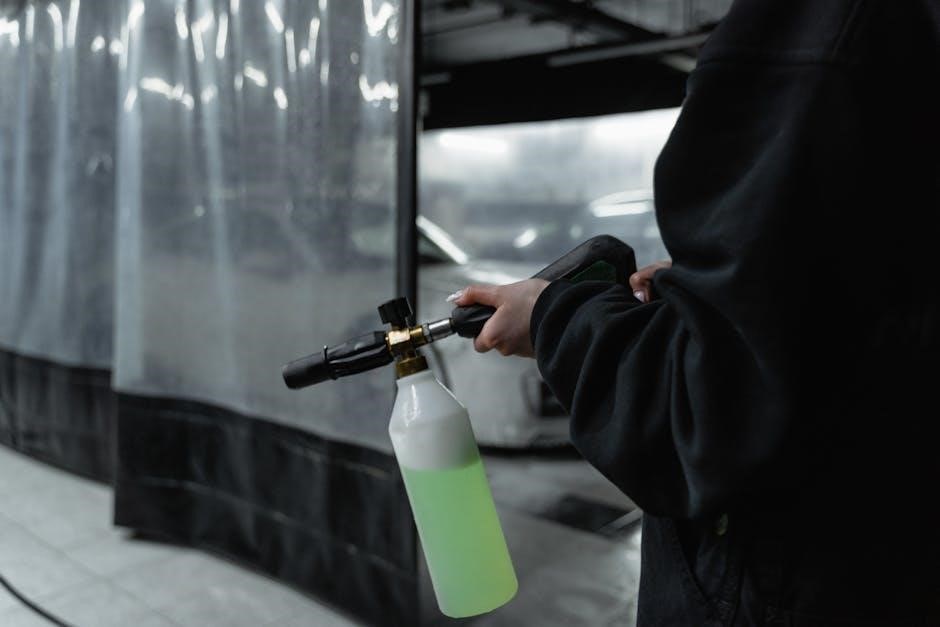
The pre-wash rinse, a crucial first step detailed in any comprehensive auto detailing checklist PDF, effectively removes loose dirt, grime, and surface contaminants. This initial rinse, performed with low pressure, prevents scratching during the subsequent wash stage. Utilizing a foam cannon or pressure washer enhances contaminant lifting.
A thorough pre-wash minimizes the risk of swirl marks and ensures the wash soap can work more effectively. The checklist should confirm inspection for stubborn debris, like bird droppings or bug splatter, requiring pre-treatment. Proper execution of this step sets the foundation for a flawless exterior detail.
B. Wheel & Tire Cleaning
Wheel and tire cleaning, a vital component of any auto detailing checklist PDF, demands dedicated attention due to brake dust and road grime accumulation. The checklist should specify using a dedicated wheel cleaner, avoiding harsh chemicals that can damage finishes. Employing separate brushes for tires and wheels prevents cross-contamination.
A thorough cleaning includes agitating the cleaner with brushes, ensuring complete coverage. Rinsing must be comprehensive, removing all traces of the cleaner. Detailing checklists often include tire dressing application post-cleaning, enhancing appearance and protecting rubber. Proper wheel care contributes significantly to the vehicle’s overall aesthetic.
C. Soap Application & Wash
Soap application and washing, central to any auto detailing checklist PDF, require a pH-neutral car wash soap to avoid damaging the vehicle’s paint. The checklist should emphasize the two-bucket method – one for soapy water, one for rinsing the wash mitt – minimizing swirl marks. Applying soap from the top down prevents re-depositing dirt.
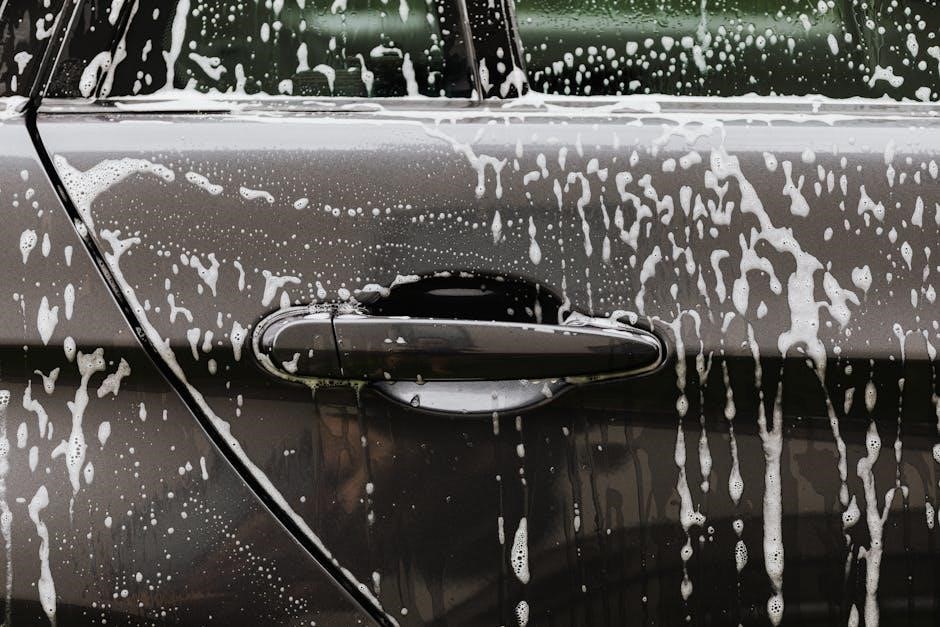
A quality wash mitt, microfiber is preferred, gently lifts dirt away. Rinsing should be frequent, ensuring the soap doesn’t dry on the surface. Detailing checklists often include a pre-wash rinse to remove loose debris. Proper washing technique is crucial for a spotless finish and paint protection.
D. Rinse & Dry
Rinsing and drying, a critical step in any auto detailing checklist PDF, demands thoroughness to prevent water spots and streaks. The checklist should specify a spot-free rinse, ideally using filtered water or a water softener. Employing a dedicated drying aid enhances gloss and lubrication, minimizing friction.
Microfiber drying towels are essential, absorbing water effectively without scratching the paint. Drying should proceed from top to bottom, overlapping strokes for complete coverage. Detailing checklists often recommend multiple towels to avoid spreading contaminants. Proper drying ensures a flawless, showroom-ready finish.
E. Clay Bar Treatment
The Clay Bar treatment, a vital component of a comprehensive auto detailing checklist PDF, removes embedded contaminants that washing misses. This process requires a clay bar and lubricant, ensuring a smooth glide across the paint surface. The checklist should emphasize consistent, overlapping passes, feeling for bonded contaminants.
Regular kneading of the clay bar exposes a fresh surface, maintaining its effectiveness. Inspect the clay frequently for accumulated debris. Following claying, a thorough rinse and drying are crucial. This step prepares the paint for polishing, maximizing gloss and adhesion of subsequent protective layers.
F. Polishing & Buffing
Polishing and buffing, critical stages detailed in an auto detailing checklist PDF, correct paint imperfections like swirl marks and scratches. The checklist must specify appropriate pad and compound selection based on paint hardness and defect severity. Begin with less aggressive combinations, progressively increasing if needed.
Consistent, overlapping passes are essential, maintaining moderate pressure and speed. Regularly inspect the paint’s progress, wiping away residue to assess correction. Buffing follows polishing, refining the finish to a high gloss. Proper technique prevents hazing and ensures optimal clarity, preparing the surface for wax or sealant.
G. Waxing/Sealing
Waxing or sealing, a vital step outlined in any comprehensive auto detailing checklist PDF, protects the paint and enhances gloss. The checklist should detail product choice – wax for warmth and depth, sealant for durability. Apply a thin, even coat using an applicator pad, working in sections.
Allow the product to haze according to manufacturer instructions before buffing off with a clean microfiber towel. Multiple thin coats generally yield better results than one thick coat. Inspect for any remaining residue, ensuring a flawless finish. This final step provides long-lasting protection against the elements.
VII. Interior Detailing Process – Step-by-Step
A thorough interior detail, as detailed in a comprehensive auto detailing checklist PDF, begins with complete vacuuming – seats, carpets, and mats. Next, meticulously clean the dashboard, console, and all trim pieces. Upholstery cleaning requires appropriate products for the material, followed by a protectant application.
Windows and mirrors should be cleaned streak-free. Don’t forget details like cleaning and protecting the glovebox, vents, and steering wheel. Finally, add finishing touches like air fresheners or detailing brushes for a premium feel. A detailed checklist ensures no area is overlooked, maximizing customer satisfaction.
A. Vacuuming (Seats, Carpets, Mats)
Effective vacuuming, a cornerstone of any auto detailing checklist PDF, requires a systematic approach. Begin by removing floor mats and vacuuming them separately, front and back. Next, thoroughly vacuum all carpeted areas, paying close attention to edges and under seats. Utilize crevice tools to reach tight spaces.
Vacuum seats meticulously, adjusting nozzle height for fabric or leather. Don’t overlook the trunk or cargo area. A powerful vacuum and various attachments are essential. This step removes loose debris, pet hair, and dirt, preparing the interior for deeper cleaning. Referencing a checklist ensures complete coverage.
B. Dashboard & Console Cleaning
Dashboard and console cleaning, detailed within an auto detailing checklist PDF, demands gentle yet effective techniques. Start by dusting loose debris with a microfiber cloth. Then, apply an interior cleaner specifically formulated for the dashboard’s material – plastic, vinyl, or wood. Avoid harsh chemicals that can cause damage.
Use a soft brush to agitate the cleaner, reaching into vents and crevices. Wipe clean with a fresh microfiber cloth. Pay attention to the console, gear shift, and surrounding trim. Protect surfaces with a UV protectant to prevent fading and cracking. A systematic approach, guided by the checklist, ensures a spotless finish.
C. Upholstery Cleaning & Protection
Upholstery cleaning, a crucial step detailed in an auto detailing checklist PDF, requires material-specific care. Identify whether the upholstery is fabric, leather, or vinyl. For fabric, vacuum thoroughly, then apply an upholstery cleaner, gently agitating with a brush. Extract the cleaner with a wet/dry vacuum.
Leather demands a specialized leather cleaner and conditioner to maintain suppleness and prevent cracking. Vinyl can be cleaned with a mild all-purpose cleaner. After cleaning, apply a protectant to shield against stains and UV damage. A detailed checklist ensures no area is missed, preserving the interior’s appearance.
D. Window & Mirror Cleaning
Effective window and mirror cleaning, as outlined in a comprehensive auto detailing checklist PDF, is vital for visibility and overall aesthetic. Begin with a thorough vacuuming of any loose debris. Apply a dedicated glass cleaner, avoiding ammonia-based products on tinted windows.
Use two microfiber towels – one for application and one for buffing – to prevent streaks. Pay attention to edges and corners where grime accumulates. Ensure both interior and exterior surfaces are spotless. A detailed checklist confirms this step isn’t overlooked, delivering crystal-clear visibility and a professional finish.
E. Final Interior Detailing Touches
The final interior detailing touches, documented within a thorough auto detailing checklist PDF, elevate the customer experience. Inspect for any remaining dust or smudges on all surfaces. Apply a protectant to vinyl and plastic components to prevent fading and cracking.
Ensure air fresheners are discreetly placed, offering a pleasant scent. Double-check all compartments, including glove boxes and door pockets. A final walk-around confirms everything is spotless and organized. These details demonstrate professionalism and commitment to quality, leaving a lasting positive impression.
VIII. Post-Detailing Inspection Checklist
A comprehensive post-detailing inspection, crucial for any auto detailing checklist PDF, verifies quality and customer satisfaction. Inspect the exterior for swirl marks, wax residue, or missed spots. Check interior surfaces for streaks, smudges, or lingering odors. Confirm all accessories are functioning correctly, including lights and electronics.
Review the vehicle against the initial assessment photos, documenting improvements. Utilize a final walk-around checklist to ensure nothing was overlooked. This meticulous process minimizes potential complaints and reinforces a professional image, solidifying customer trust and repeat business.
IX. Customer Intake & Work Order Integration
Effective customer intake is vital when utilizing an auto detailing checklist PDF. Combine the intake process with a detailed work order to clearly outline services requested, agreed-upon pricing, and any specific customer concerns. Templates, like those found on Template.net, streamline this integration, creating a single, efficient document.
Document vehicle condition upon arrival, noting existing damage with photos. This protects both the detailer and the customer. A well-integrated system minimizes misunderstandings, ensures transparency, and fosters a professional relationship, leading to increased customer satisfaction and loyalty.
X. Digital vs. Printable Checklists (PDF, Excel, Google Docs)
Auto detailing checklists come in various formats, each with unique advantages. PDFs offer portability and a professional presentation, ideal for sharing with customers. Excel spreadsheets, like the Google Docs example provided, allow for easy customization and data tracking, though they may lack visual polish.
Google Docs provides collaborative editing and cloud storage. Printable checklists are useful for technicians preferring a tactile approach. The best choice depends on your workflow and preferences; digital formats enhance efficiency, while printed versions offer simplicity and reliability.
XI. Customizing Your Auto Detailing Checklist
Tailoring your auto detailing checklist is crucial for reflecting your specific services and client needs. Begin with a base template – PDF, Excel, or Google Docs – and modify it to include all offered packages. Consider adding sections for specific vehicle types or detailing levels, like basic wash versus full detail.
Incorporate client-specific notes, documenting existing damage or special requests. Ensure the checklist aligns with your team’s workflow and skillsets. Regularly review and update the checklist based on feedback and evolving industry standards, maintaining its relevance and effectiveness.
XII. Maintaining and Updating Your Checklist
Regularly reviewing and updating your auto detailing checklist – whether in PDF, Excel, or Google Docs – is paramount for sustained efficiency. Solicit feedback from your detailing team to identify areas for improvement or clarification. Incorporate new techniques, products, or service offerings as they emerge within the industry.
Document any changes made to the checklist, maintaining a version history for reference. Ensure all team members have access to the most current version, preventing inconsistencies. Periodic updates guarantee the checklist remains a valuable, accurate tool for delivering consistent, high-quality detailing services.
XIII. Legal Considerations & Liability
A comprehensive auto detailing checklist, particularly within a PDF work order, can serve as crucial documentation in mitigating legal risks. Clearly outlining the scope of services, pre-existing damage noted during inspection, and customer approvals establishes a record of agreed-upon work. This documentation can protect against claims of unauthorized work or damage.
Ensure your checklist includes a disclaimer regarding inherent risks associated with detailing, such as potential swirl marks during polishing. Consult with legal counsel to review your checklist and ensure compliance with local regulations regarding consumer protection and liability. Proper documentation is key to responsible business practice.
XIV. Resources for Auto Detailing Checklists
Numerous online resources offer downloadable auto detailing checklists in PDF, Word, and Excel formats. Template.net provides editable templates, including combined customer intake, work order, and inspection checklists, leveraging an AI editor for customization. Google Docs offers spreadsheet templates, easily adaptable for individual needs, as demonstrated by publicly available examples.
Detailing forums and professional detailing associations often share checklist samples and best practices. Exploring these communities can provide valuable insights and templates tailored to specific detailing services. Remember to adapt any downloaded checklist to your specific business needs and legal requirements.